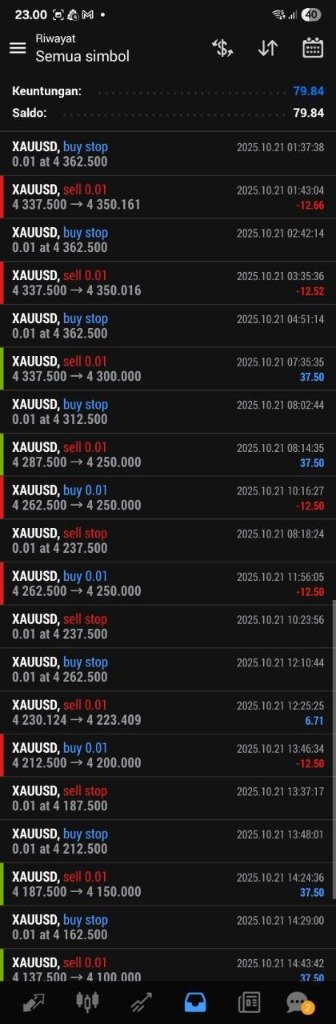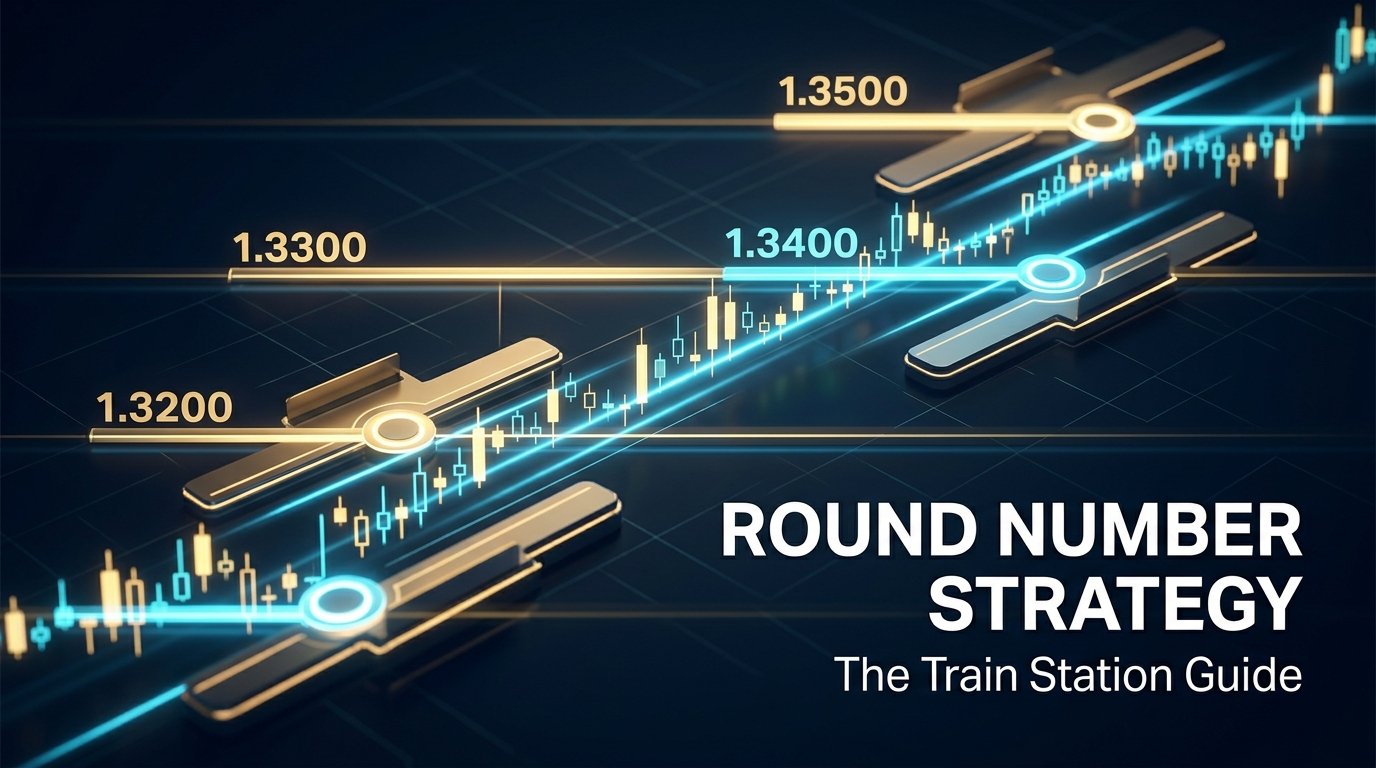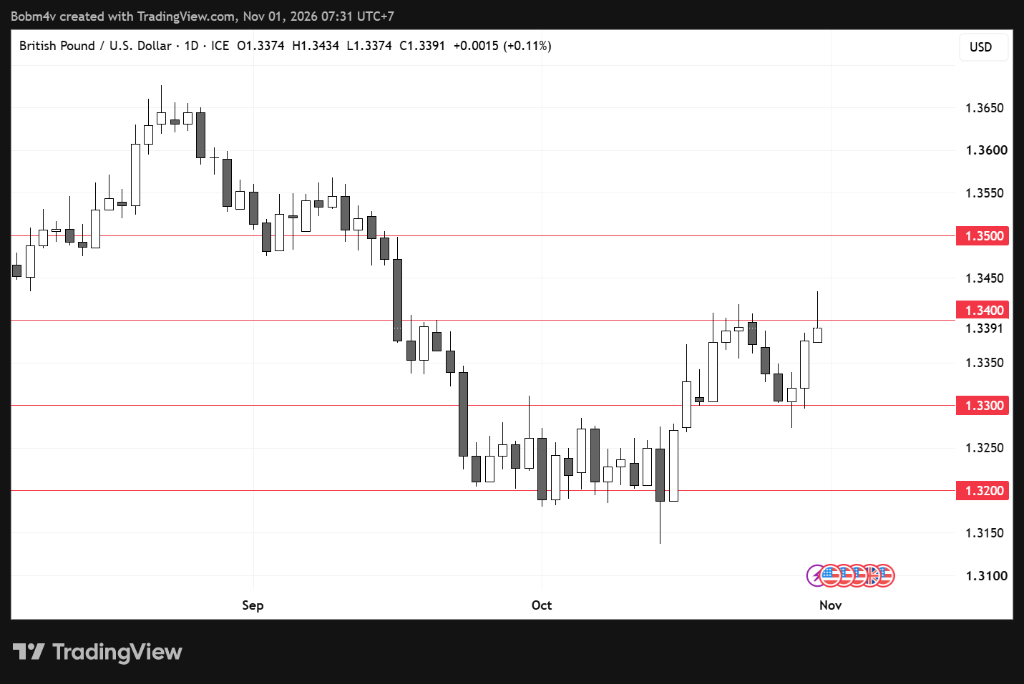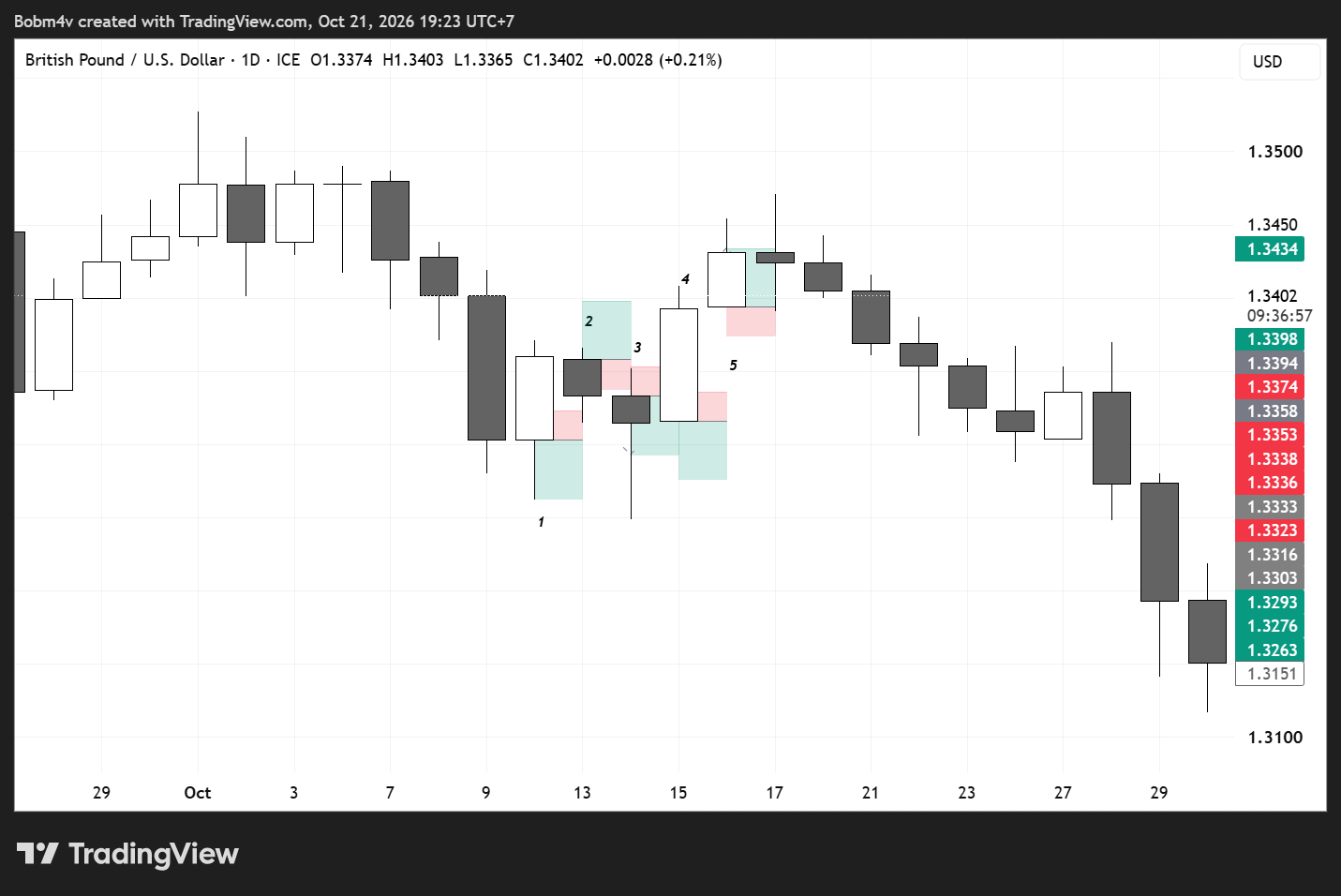
If you spend even ten minutes browsing trading social media, you will encounter a recurring script. Content creators draw dozens of colorful boxes across a chart and explain market movements with absolute certainty:
- “Institutional banks are accumulating liquidity right here…”
- “Smart money is manipulating retail sellers before the real markup…”
- “Central banks are defending this exact level…”
I always find these narratives fascinating for one simple reason: None of these creators work inside institutional trading desks.
Unless someone manages the physical bullion desk at a major liquidity provider or sits on an exchange clearing committee, claiming to know the hidden intentions of global banks is pure fiction. They are retail traders guessing from their laptops, inventing stories after the fact to sound sophisticated.
When I developed the automated algorithms I trade on Gold (XAU/USD), I started from the opposite premise: I am a small retail participant, and I have zero inside knowledge of institutional plans.
I do not know why the big players move price when they do. More importantly, I do not need to know.
My entire approach is built on a humble philosophy: when the large market participants commit capital and push price in one direction, I simply ride along behind them. Just like that.
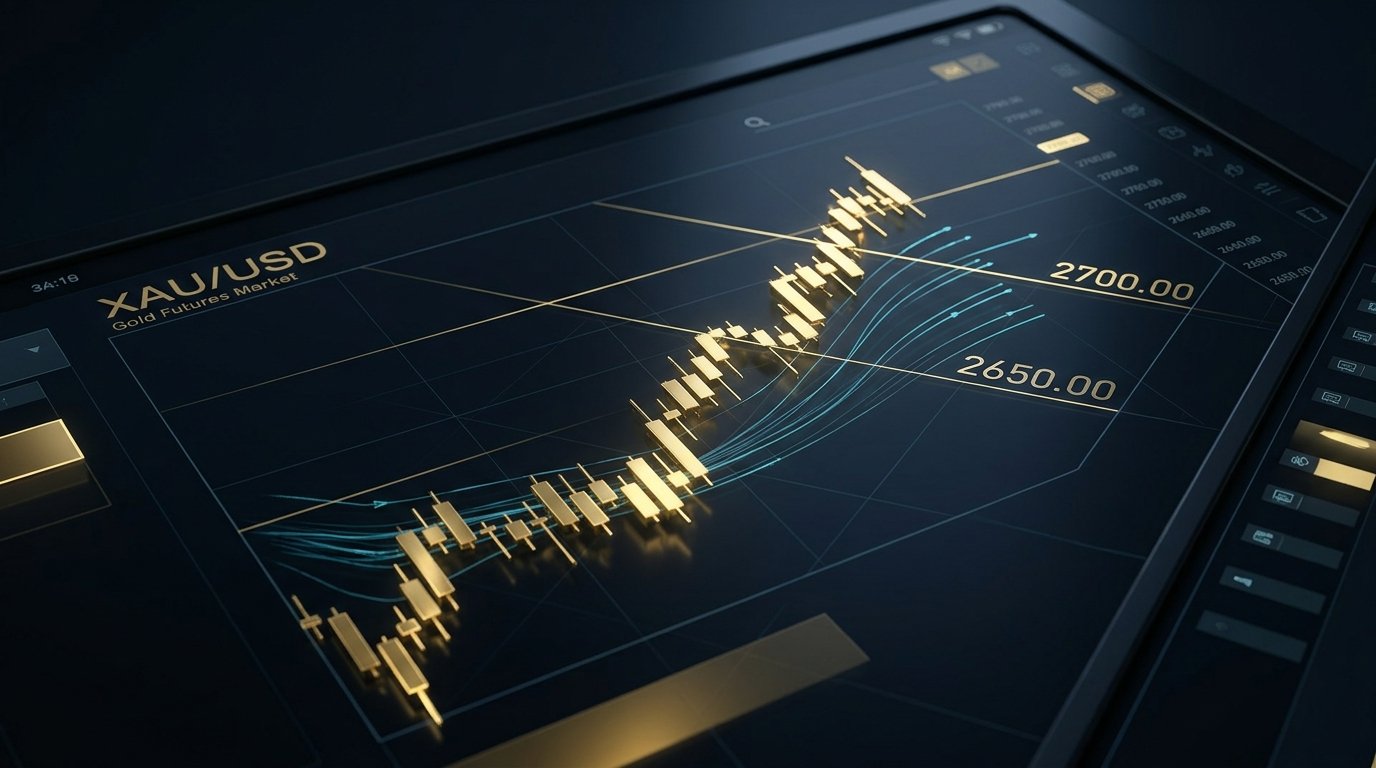
Why Round Numbers (2650, 2700, 2750, 2800)?
If I have no inside connection to banking desks, why is my algorithmic framework built strictly around 50-point psychological round numbers on Gold?
The answer has nothing to do with secret banking codes. It comes down to human psychology and market structure:
1. The Natural Focal Point of Human Decision-Making
Humans naturally think in round numbers. When setting price targets, protective thresholds, or large commercial contracts, portfolio managers and algorithmic systems naturally gravitate toward clean digits: 2700, 2750, 2800.
Because thousands of market participants across the globe stare at the exact same round figures, orders inevitably cluster around these coordinates. That concentration creates genuine liquidity and volatility whenever price approaches.
2. The “Train Station” Principle
In our foundational guide, The Train Station Guide to Objective Trading, I treat round numbers as fixed train stations along an otherwise unpredictable track:
- At an arbitrary price like 2734.62, market movement is largely noise. Trying to predict direction in the middle of nowhere is pure guesswork.
- At a round number like 2750.00, volume and institutional transactions concentrate. That is our station platform.
I do not need to know who owns the train or why the conductor decided to depart at 14:00. I only need to wait patiently on the platform until the train actually starts rolling out of the station.
The Mechanical Rule: Confirming Movement with Line X and Line Y
Because I refuse to predict whether a round number will hold as support or break as resistance, our algorithm never places an order while price is sitting directly on the level.
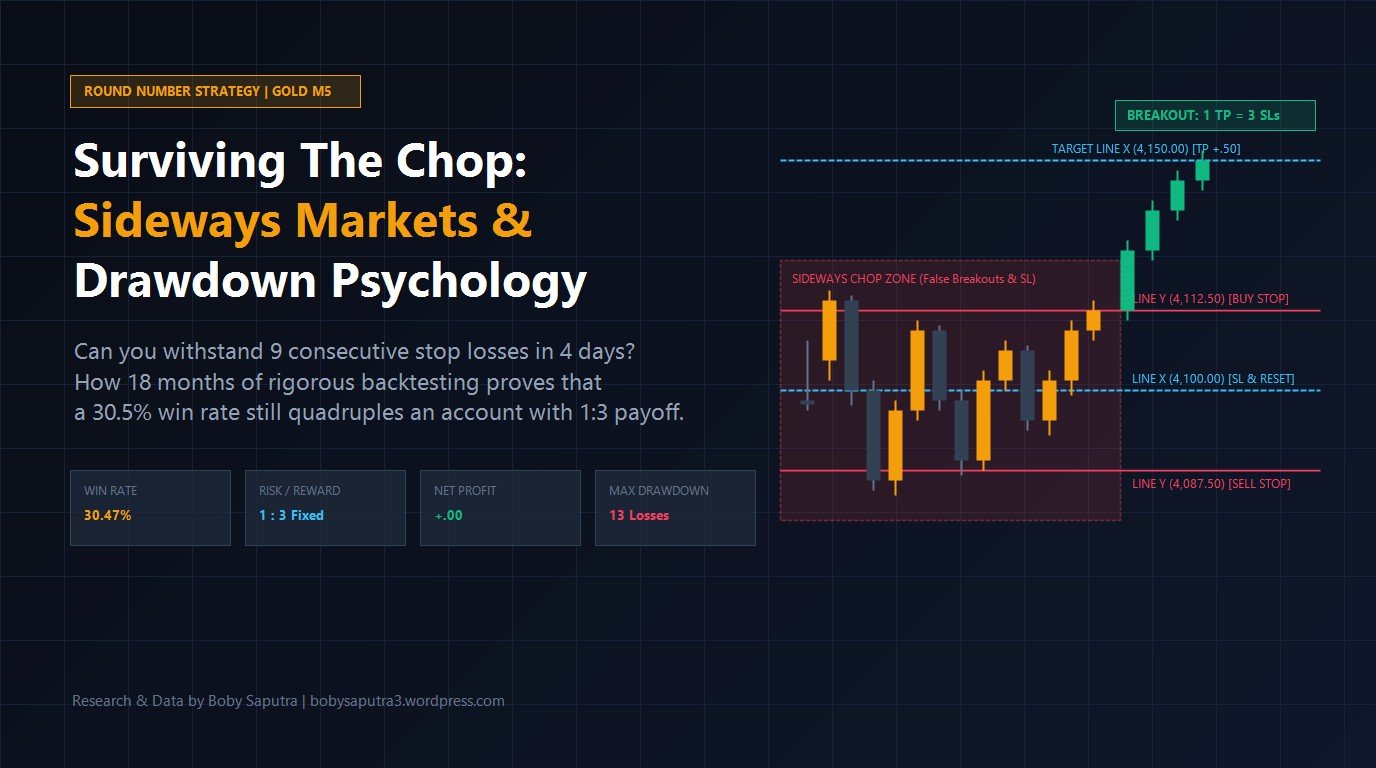
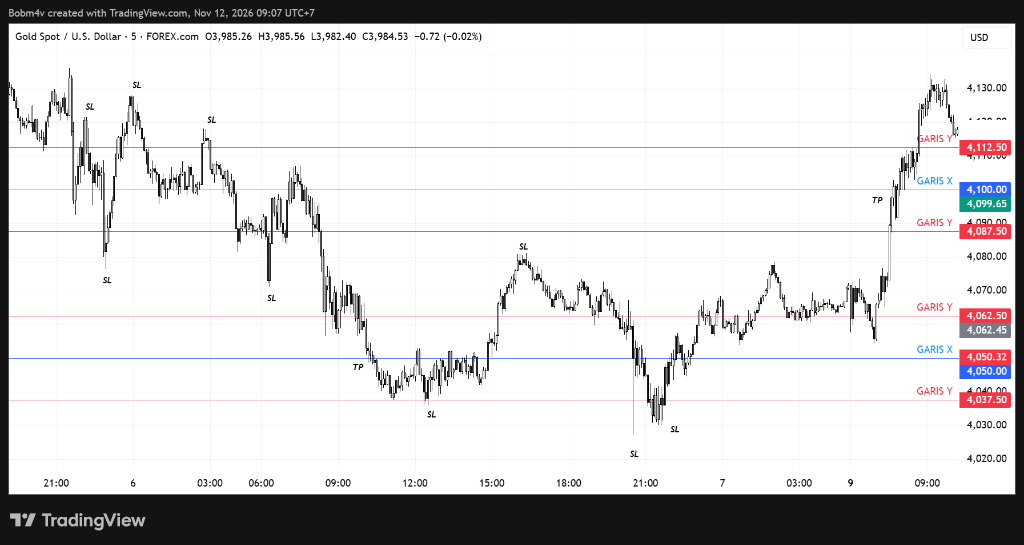
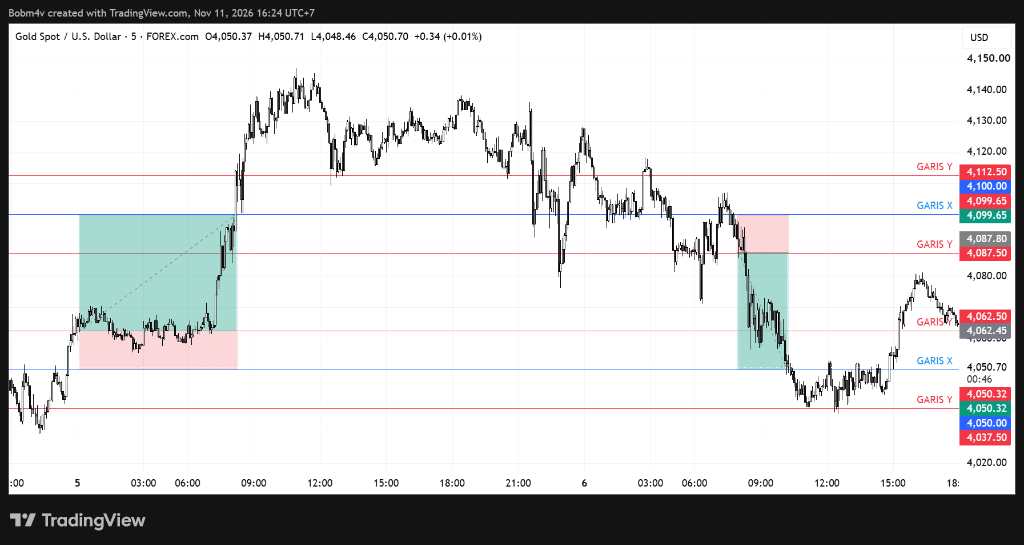
Instead, as detailed in The XAU/USD Round Number Strategy (M15), the algorithm uses a fixed confirmation buffer called Line X and Line Y:
| Stage | Market Behavior | Algorithmic Action |
|---|---|---|
| Stage 1: Arrival | Gold trades directly around 2750.00 | Do nothing. No prediction, no anticipation bias. |
| Stage 2: Separation | Price pushes beyond Line X (Upper Buffer) | The train has left northward. The algorithm enters a Buy. |
| Stage 3: Alternate | Price pushes below Line Y (Lower Buffer) | The train has left southward. The algorithm enters a Sell. |
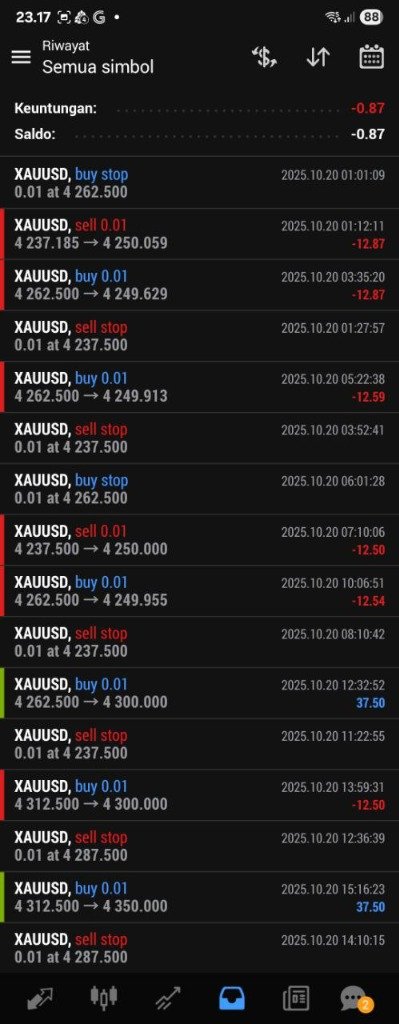
| Stage 4: Protection | Hard Stop Loss is assigned immediately | Predefined 1% binary risk. No averaging, no martingale. |
We do not guess the breakout in advance. We let the big players expend their capital to create the displacement first. Once the momentum proves itself beyond our buffer, we step aboard in the same direction.
Accepting Small Losses to Catch 1:3 Expansions
Being a small fish following whales requires total acceptance of being wrong frequently. As analyzed in our study on Surviving the Chop in Sideways Markets, prolonged consolidations often cause temporary false breakouts.
When price crosses our buffer and immediately reverses, there is zero emotional bargaining:
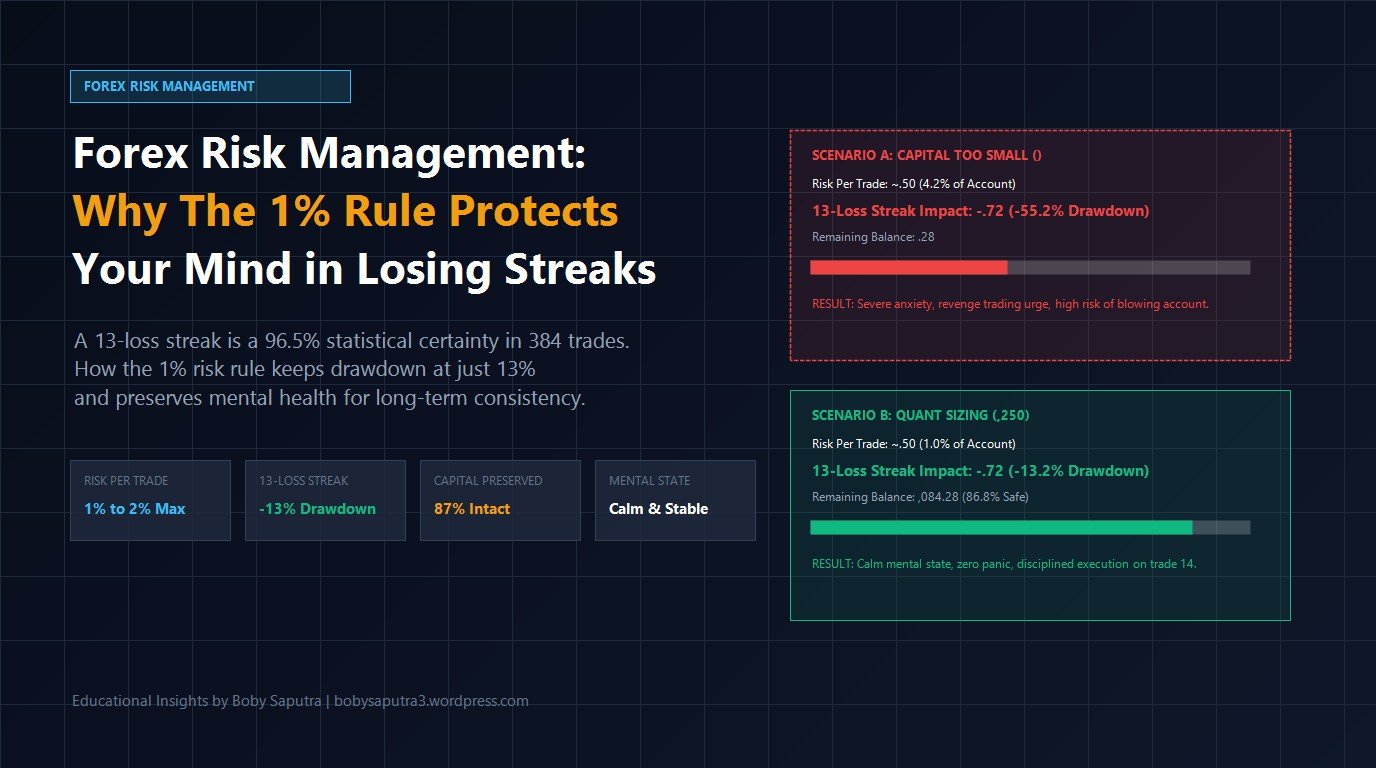
- A Hard Stop Loss is already active in the market, capping the loss at exactly 1% of account equity.
- There is no martingale, no lot multiplication, and no overnight floating drawdown.
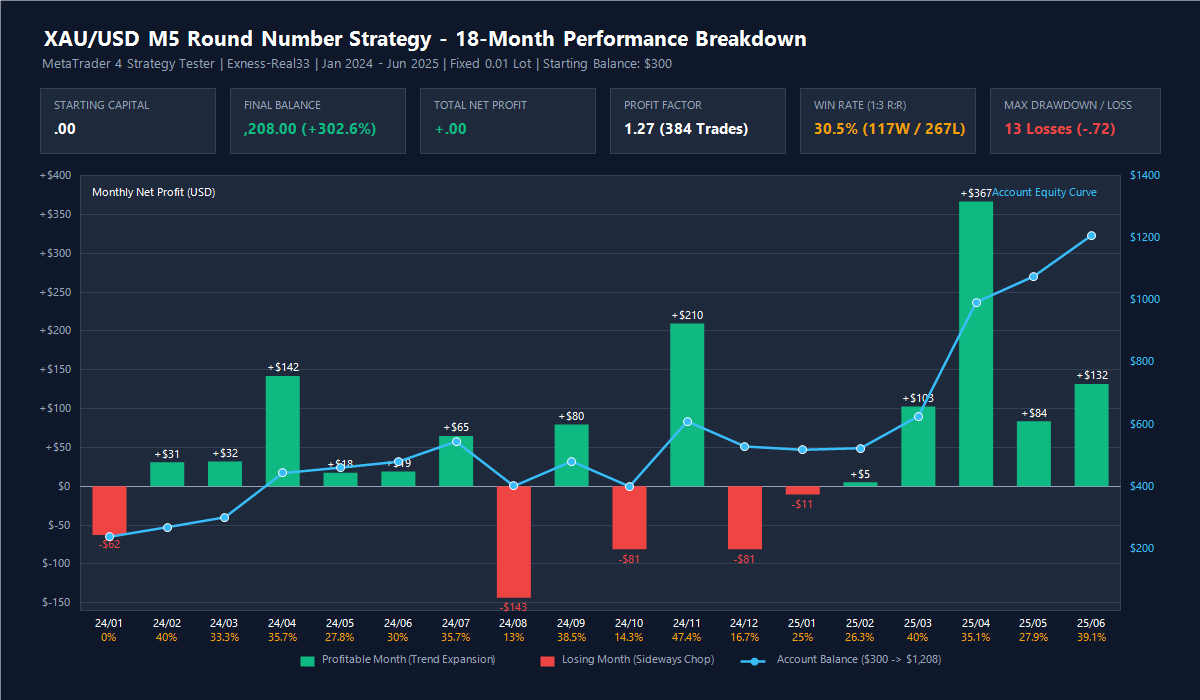
- If seven out of ten trades hit the stop loss, total loss is -7%.
- When the remaining three trades catch genuine institutional momentum and reach our 1:3 Risk-to-Reward target (+3% each), they yield +9%.
- Net result: +2% account growth, despite being wrong 70% of the time.
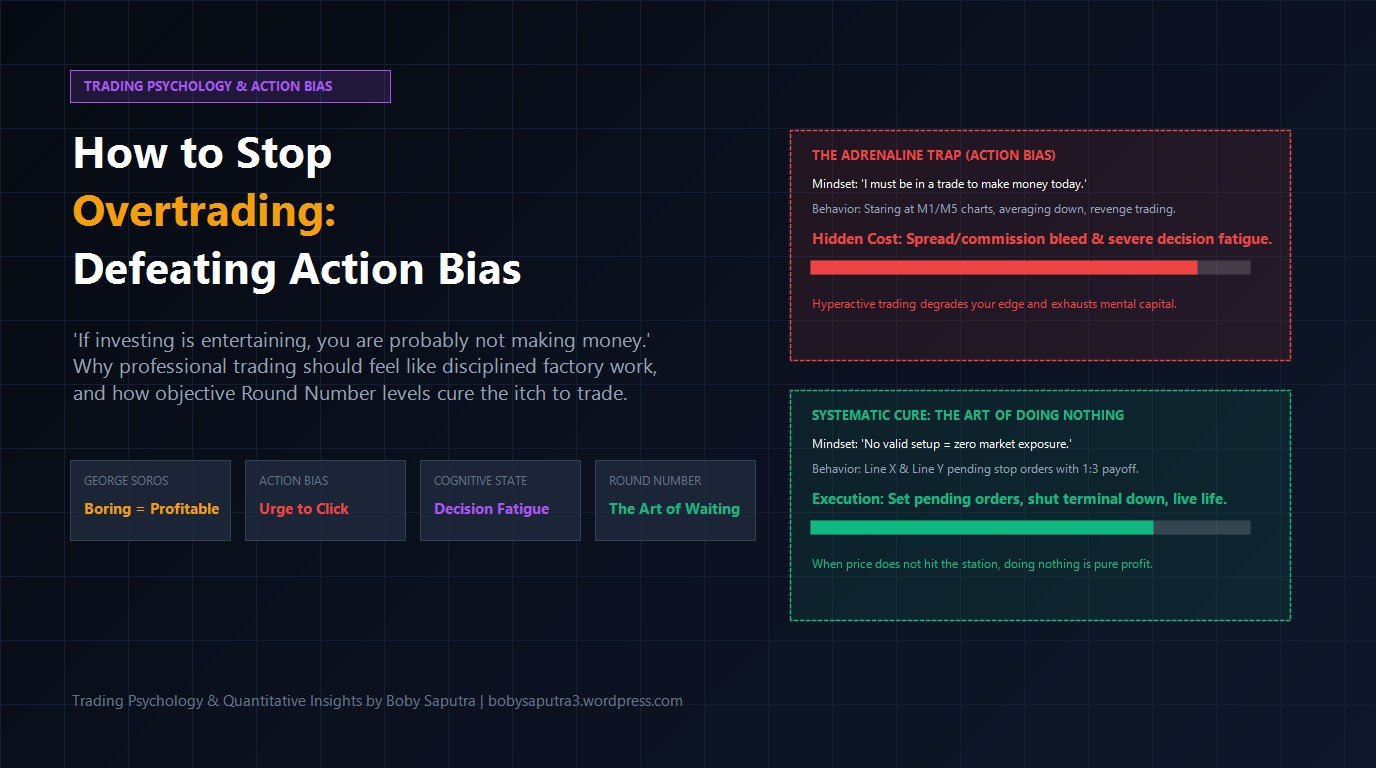
Trading becomes remarkably peaceful when you stop trying to be a genius and start trusting basic probability. We explored this psychological transition in our guide on How to Stop Overtrading and Defeat Action Bias.
Letting Go of Ego: The View from Retirement
Looking back after retiring from active retail trading in 2025, my biggest breakthrough came not from discovering a secret indicator, but from letting go of the ego that demanded I understand everything.
The financial markets are far too vast for any single retail trader to outsmart. You do not need to invent complex theories about central bank conspiracies to extract a mathematical edge.
Establish an objective station on your chart, wait for the heavy volume to choose a direction, protect your downside with military discipline, and let the market do the heavy lifting for you.
Official Automated Expert Advisor • 100% Free
Automate This Strategy with the Round Number Gold EA
Why calculate Round Number levels and manage pending orders manually? Download the official MT4 Expert Advisor with embedded 1:3 RR math, automatic pending order purge, and the exact backtested preset (+339% gain on Exness-Real33).