
In the world of forex trading, we can find many strategies that offer different approaches to analyzing price movements. Some strategies use technical indicators, candlestick patterns, breakouts, pullbacks, or a combination of several analytical methods.
Whatever strategy you want to use, there is one thing you must ensure: THE STRATEGY MUST BE OBJECTIVE.
What do I mean by objective? Let me give you an example. When I identify a candle as a bullish candle, other people should also identify it as a bullish candle. There should be no difference in interpretation.
At this point, you should have a clear understanding of what I mean by an objective strategy.
Why should subjective strategies be avoided? Let me explain this more clearly with the image below.
But first, let me ask you a question: Have you ever learned a forex trading strategy where the instructor said, “Look, the current trend is bearish,” while you thought it was bullish?
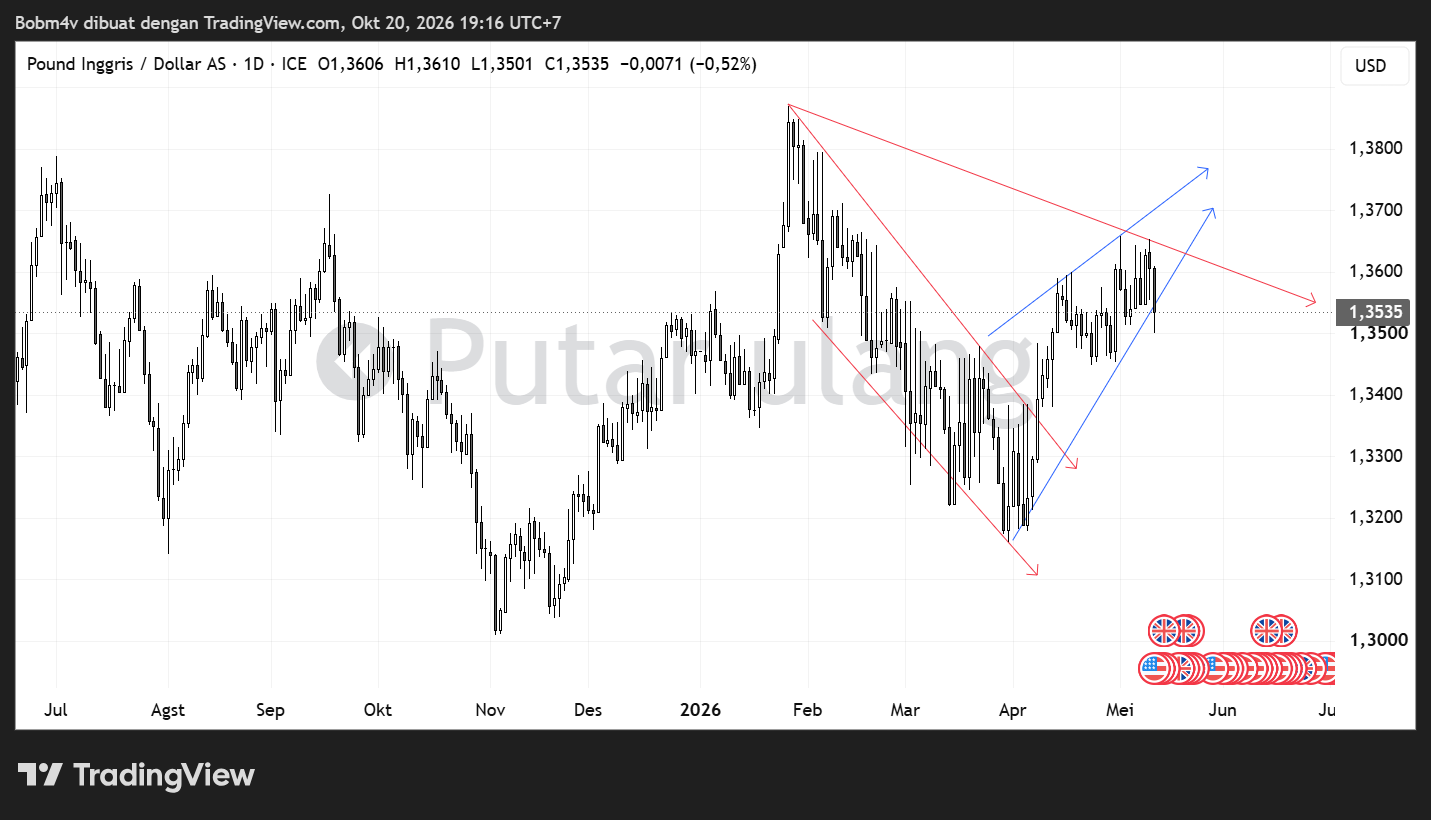
Look at the GBP/USD chart above on the D1 (daily) timeframe. If you are asked, “What is the current trend?”, the answer may depend on how each person interprets the price movement.
Traders who interpret the market as bearish may draw a red trendline, while those who interpret it as bullish may draw a blue trendline.
This illustrates the subjectivity of trend analysis: different traders can look at the same chart and reach different conclusions. Without clear and consistent rules for identifying a trend, the analysis can depend heavily on individual interpretation.
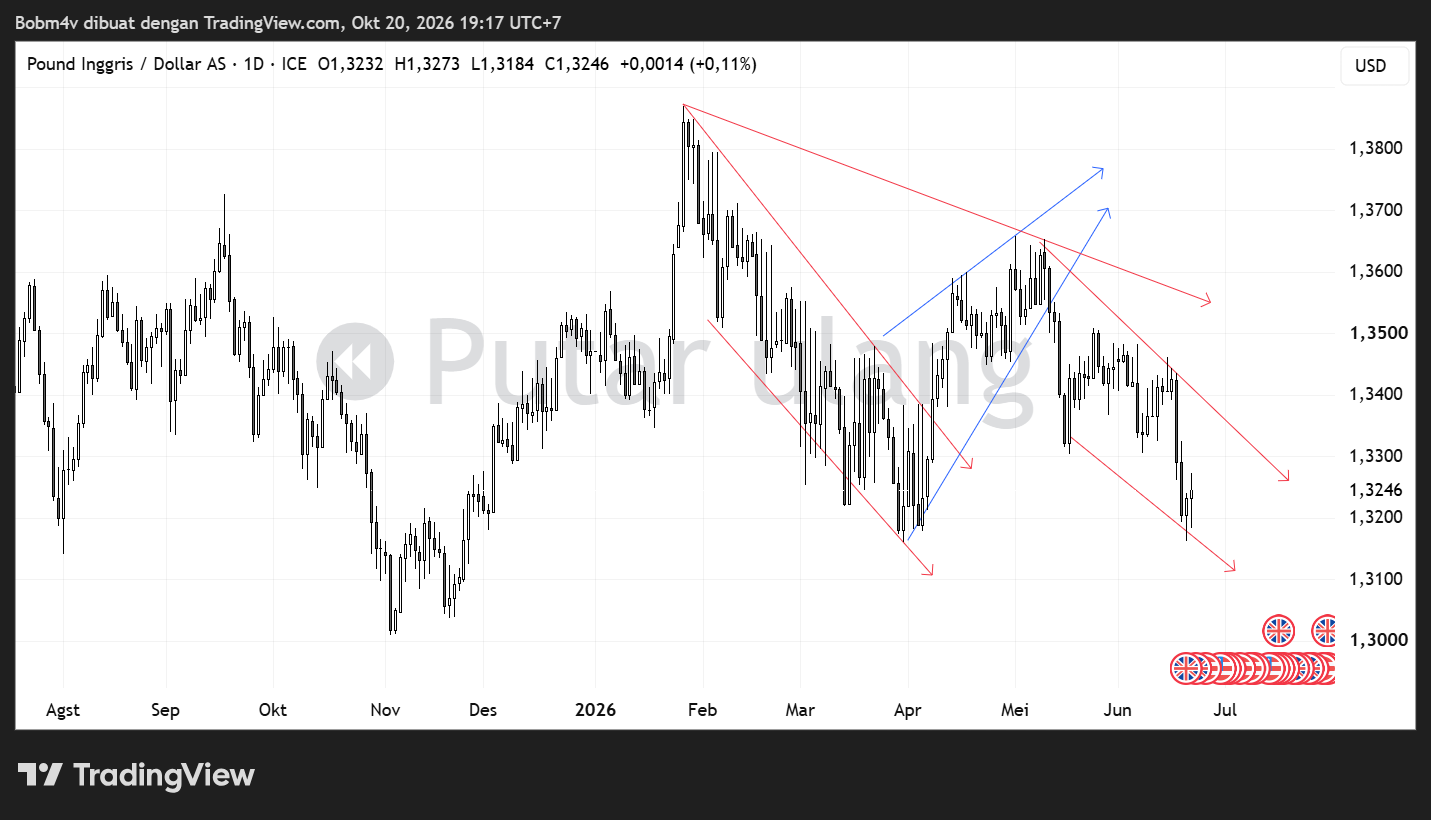
Now, let’s take a look at what happens next on the same GBP/USD chart.
A few days pass, and new candles begin to form. Surprisingly, the price moves downward again. This raises an important question: Was the trend actually bullish, or did we simply interpret the chart differently?
But that’s not the only problem. Even if we agree that the market is trending in a particular direction, we may still disagree on which swing highs and swing lows should be used to draw the trendline.
Before long, the chart can become cluttered with multiple trendlines, each telling a different story. Instead of helping us make decisions, our analysis leaves us wondering: Which trendline should we trust?
This is exactly why objectivity matters. A trading strategy should provide clear, consistent rules so that different people analyzing the same chart can reach the same conclusion.
If you are already experienced with this type of strategy, you may disagree with my perspective. That is perfectly fine. My intention is not to claim that trendline-based strategies cannot work, but to highlight a fundamental challenge: how can we know whether a strategy is truly effective if its rules depend heavily on individual interpretation?
In my view, this subjectivity creates several problems.
- No consistent rules: It becomes difficult to define precise, standardized conditions for identifying a trend.
- Ambiguous swing points: Different traders may choose different swing highs and swing lows when drawing trendlines on the same chart.
- Inconsistent entry and exit rules: If the trendline itself depends on personal judgment, the resulting entry and exit points may also vary from one trader to another.
- Difficult to conduct objective backtesting: Without clearly defined rules, it becomes challenging to test a strategy consistently against historical data. The results may depend more on how the chart is interpreted than on the strategy itself.
For me, this is the core issue. A strategy should not rely on what a trader thinks they see on a chart; it should rely on rules that can be clearly defined, consistently applied, and objectively tested.
By now, I hope you have a clear understanding of what I mean when I say that a trading strategy should be objective rather than subjective.
Are there other subjective trading strategies? Absolutely. In fact, some of them are very popular, such as Order Block strategies. In my view, these strategies can be particularly challenging to backtest objectively because identifying valid order blocks may depend on individual interpretation.
That’s all for this discussion. See you in the next article!
To see how these objective principles translate into an actual trading system, explore our complete framework in The XAU/USD Round Number Strategy (M15) and our foundational guide on building an Objective Trading Strategy.
Official Automated Expert Advisor • 100% Free
Automate This Strategy with the Round Number Gold EA
Why calculate Round Number levels and manage pending orders manually? Download the official MT4 Expert Advisor with embedded 1:3 RR math, automatic pending order purge, and the exact backtested preset (+339% gain on Exness-Real33).
Leave a Reply