Blog

  • Money Management in Forex Trading: Why Protecting Your Capital Matters

    Money Management in Forex Trading: Why Protecting Your Capital Matters

    “If you cannot make money, it is better than losing money.” These are the words of a professional trader that have always stayed with me.
    Capital protection and risk management in forex trading

    For me, this is the fundamental principle of money management. No matter how good your trading strategy is, it will be of little use if you do not apply proper money management.

    I will try to write about money management from my own perspective and based on what I have learned. Most of what I share comes from my personal experience throughout my journey in trading.

    Understanding the Concept of Money Management

    In general, money management is a branch of financial management that deals with the planning, organization, allocation, monitoring, and control of financial resources in a systematic way to achieve financial goals while minimizing the risk of loss.

    In the world of trading, money management becomes one of the most critical pillars that can determine whether a trading account survives or fails. In general financial management, the focus may be on long-term financial allocation. In trading, however, money management focuses on how we manage our capital in each position to survive and pursue consistent profitability.

    Without proper money management, even a trading strategy with a 90% win rate could lead to significant losses if one or two large losses occur.

    I have also come across many articles on the internet claiming that 90% of trading success depends on money management rather than the strategy itself.

    So, why is money management so important, and why is it often considered one of the keys to success in trading? Keep reading to explore this topic further.

    Money Management and Trading Risk: Risk vs. Capital

    In trading, especially Forex, there is a concept known as risk per trade. According to many traders who have managed to survive in the Forex market for a long time, risk per trade is one of the most important elements of money management.

    Imagine that you have $1,000 in trading capital and risk 10% of your capital on each trade. If you suffer ten consecutive losses, your capital will be severely depleted. This illustrates why risking too much on each trade can be dangerous.

    Many experienced traders choose to risk only 1–2% of their capital per trade. They understand that not every battle can be won. When they lose, they still have capital left to recover and continue trading.

    For example, if you risk 1% of your remaining capital per trade, ten consecutive losses would leave you with approximately 90% of your original capital. You would still have most of your capital available.

    Using a smaller risk per trade can also help reduce emotional pressure and the temptation to recover losses immediately. This desire for revenge trading is often one of the behaviors that can cause traders to make even worse decisions.

    The Relationship Between Risk-Reward Ratio and Money Management

    By definition, the Risk-Reward Ratio (RR) measures the relationship between the potential loss (risk) and the potential profit (reward) associated with a trading decision.

    Earlier, I discussed risk per trade. Another important concept is the risk-reward ratio, which is closely related to the trading strategy we use.

    For example, if we know that a strategy has a 50% win rate, using a 1:1 risk-reward ratio would produce a break-even result before transaction costs, assuming the planned risk and reward are achieved consistently.

    In reality, however, the result would be negative after accounting for trading costs such as spreads and commissions.

    Therefore, if a strategy has a 50% win rate and uses a 1:1.5 risk-reward ratio, it would have a positive expected result before transaction costs, assuming the strategy consistently achieves those figures.

    But does a 50% win rate always require a 1:1.5 risk-reward ratio to be profitable? We explore this question further when evaluating historical data.

    Other Important Concepts in Money Management

    You may have heard of several other key concepts, such as losing streaks, drawdown, and backtesting. To explore these topics in depth, read our detailed guides on Mastering Backtest Metrics and Connecting the Dots of Backtesting.

    Final Thoughts

    Ultimately, we all need to understand that trading is not just about having a good strategy. Money management is also a fundamental part of building a sustainable trading approach.

    A strategy may look promising, but without proper risk management, it can still expose us to substantial losses.

    That is all I would like to share about money management for now. If you have any thoughts or questions to discuss, feel free to leave a comment.

    See you in the next article!

    For an empirical mathematical deep dive into surviving statistical losing streaks, read our breakdown of The 1% Rule During Losing Streaks and see how strict risk limits govern our Gold M15 Framework.

    Official Automated Expert Advisor • 100% Free

    Automate This Strategy with the Round Number Gold EA

    Why calculate Round Number levels and manage pending orders manually? Download the official MT4 Expert Advisor with embedded 1:3 RR math, automatic pending order purge, and the exact backtested preset (+339% gain on Exness-Real33).
  • Objective Trading Strategy: Clear Rules for Success

    Objective Trading Strategy: Clear Rules for Success

    In this article, we will try to create a trading strategy that is objective and unambiguous. Everyone should arrive at the same interpretation of the rules, regardless of their personal opinions.

    Let’s revisit the key requirements of an objective trading strategy:

    1. Clear rules
    2. Clearly defined entry conditions and entry points
    3. Clearly defined exit conditions and exit points

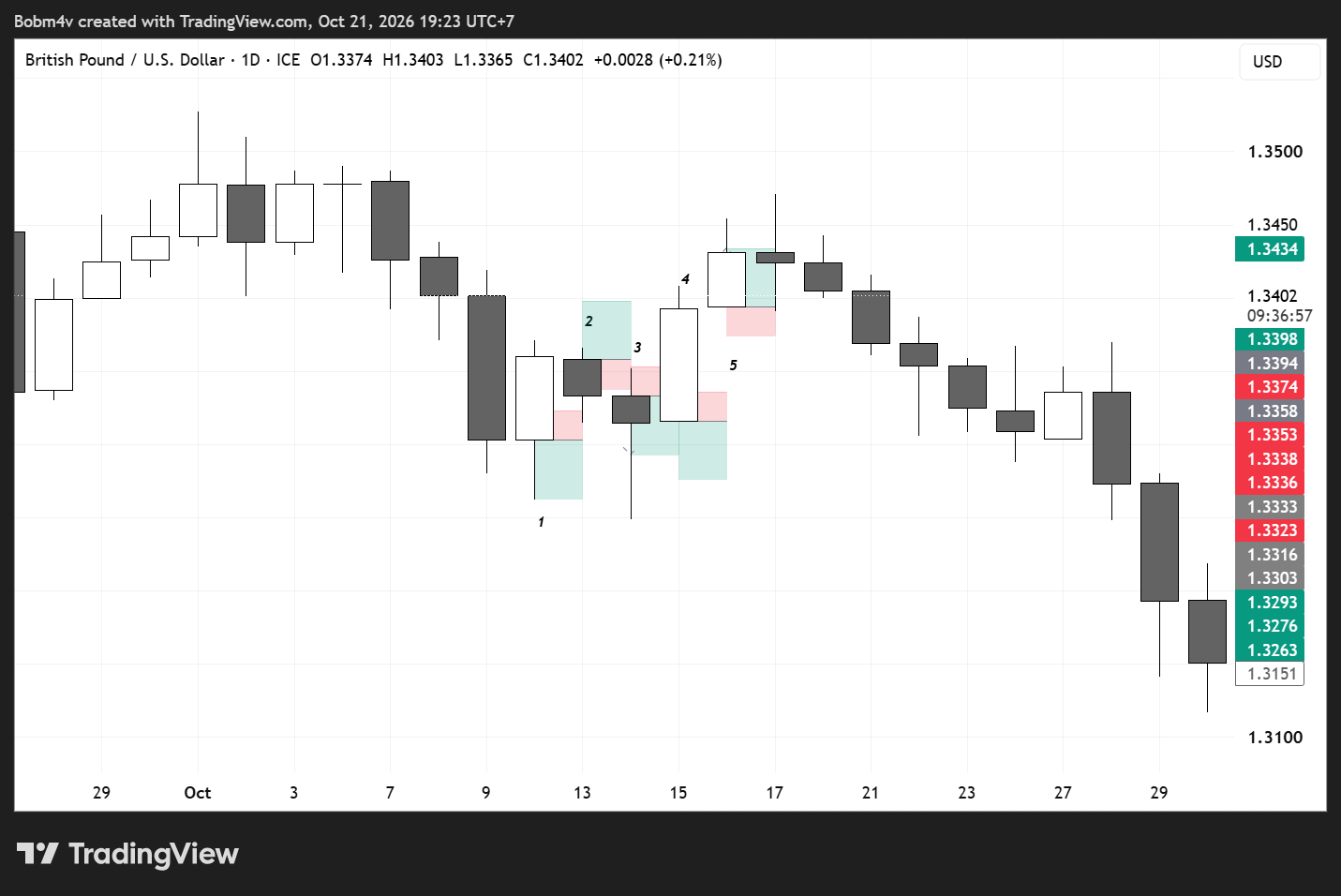
    Now, take a look at the chart below.

    Defining the Trading Rules

    The chart above shows GBP/USD on the D1 timeframe, which means each candle represents one day. I’m sure you already know that, right?

    Let’s define the rules of this strategy.

    1. Trading Rules

    We will only use the D1 timeframe and the GBP/USD pair with a specific broker that we have selected. This is important because candle formations can sometimes differ between brokers.

    2. When and Where to Enter

    I will enter a sell position at the market open today if yesterday’s candle closed bearish. I will enter a buy position at the market open today if yesterday’s candle closed bullish.

    Even if a candle is only slightly bullish or bearish, as long as it can be identified as bullish or bearish, we will use that signal.

    3. When and Where to Exit

    I will only exit a buy or sell position when either the Take Profit (TP) or Stop Loss (SL) is hit.

    Never change this rule during the test, because doing so could affect the backtesting results. In this example, the SL is 20 pips and the TP is 40 pips. These values can be adjusted when testing different variations of the strategy.

    Let’s Review the Results

    Now, let’s discuss the results based on the numbered candles in the image.

    1. Candle 1: In my view, the TP was hit first before the price moved up, giving us +40 pips.
    2. Candle 2: The SL was hit, resulting in -20 pips.
    3. Candle 3: The TP was hit, resulting in +40 pips.
    4. Candle 4: The SL was hit, resulting in -20 pips.
    5. Candle 5: The TP was hit, resulting in +40 pips.

    So far, we have hit TP three times and SL twice.

    The total result is:

    • Total profit: 3 × 40 pips = 120 pips
    • Total loss: 2 × 20 pips = 40 pips
    • Net result: +80 pips, before transaction costs.

    Do you understand how this strategy works, everyone?

    One Important Thing to Consider

    There is one important detail we need to consider when evaluating a strategy using the D1 timeframe.

    Each daily candle shows the opening, highest, lowest, and closing prices for that day. However, it does not show the exact sequence in which prices moved between those points.

    What if the price hits both the TP and SL levels within the same daily candle?

    Using D1 data alone, we may not be able to determine which level was reached first. If we simply assume that the TP was hit first, we could overestimate the strategy’s performance. The opposite assumption could underestimate it.

    To handle this situation more reliably, we can use lower-timeframe data to investigate the price movement in greater detail. Alternatively, we can establish a consistent testing assumption for every ambiguous trade and clearly document that assumption.

    The important thing is to apply the same method throughout the backtest. We should not choose whichever outcome produces the most favorable result.

    Your Turn to Try It

    Creating an objective trading strategy can be this simple.

    Your task now is to try it yourself using any currency pair you like. Keep the rules consistent and record the results.

    Is this strategy profitable?

    To find out, we need to conduct a backtest.

    What is backtesting, and how do we do it? We’ll continue in the next article!

    If you have any questions or comments, feel free to share them. I’m happy to discuss them with you.

    Risk Disclaimer: This article is intended for educational purposes only. Forex trading involves the risk of financial loss, and historical testing results do not guarantee future performance.

    A prime example of this objective structure in live markets is documented in our Train Station Guide to Round Numbers and the mechanical execution rules in The XAU/USD Round Number Strategy (M15).

    Official Automated Expert Advisor • 100% Free

    Automate This Strategy with the Round Number Gold EA

    Why calculate Round Number levels and manage pending orders manually? Download the official MT4 Expert Advisor with embedded 1:3 RR math, automatic pending order purge, and the exact backtested preset (+339% gain on Exness-Real33).

  • Dissecting a Forex Strategy: What Makes It Worth Using?

    Dissecting a Forex Strategy: What Makes It Worth Using?

    In the world of forex trading, we can find many strategies that offer different approaches to analyzing price movements. Some strategies use technical indicators, candlestick patterns, breakouts, pullbacks, or a combination of several analytical methods.

    Whatever strategy you want to use, there is one thing you must ensure: THE STRATEGY MUST BE OBJECTIVE.

    What do I mean by objective? Let me give you an example. When I identify a candle as a bullish candle, other people should also identify it as a bullish candle. There should be no difference in interpretation.

    At this point, you should have a clear understanding of what I mean by an objective strategy.

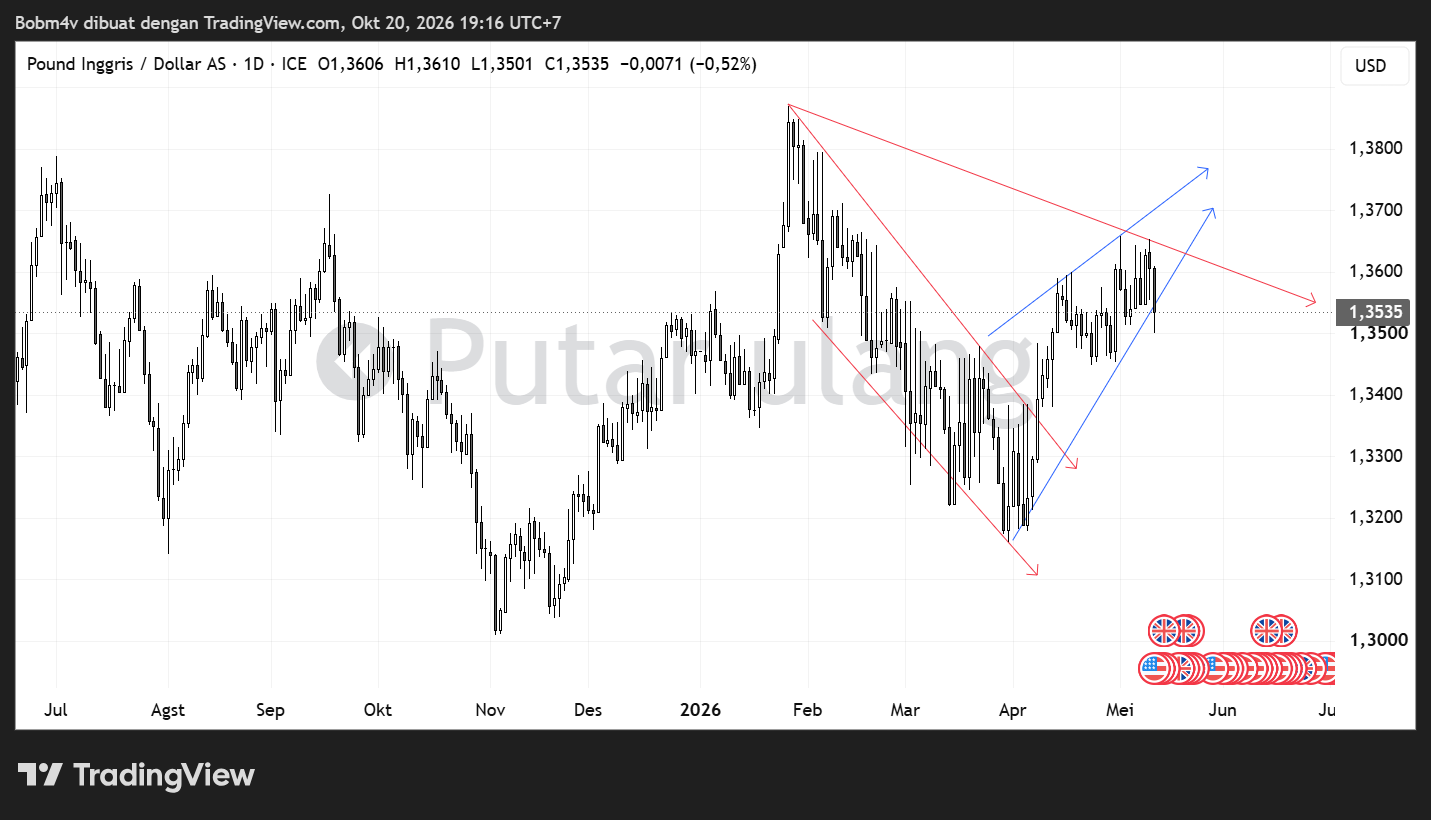
    Why should subjective strategies be avoided? Let me explain this more clearly with the image below.

    But first, let me ask you a question: Have you ever learned a forex trading strategy where the instructor said, “Look, the current trend is bearish,” while you thought it was bullish?

    Look at the GBP/USD chart above on the D1 (daily) timeframe. If you are asked, “What is the current trend?”, the answer may depend on how each person interprets the price movement.

    Traders who interpret the market as bearish may draw a red trendline, while those who interpret it as bullish may draw a blue trendline.

    This illustrates the subjectivity of trend analysis: different traders can look at the same chart and reach different conclusions. Without clear and consistent rules for identifying a trend, the analysis can depend heavily on individual interpretation.

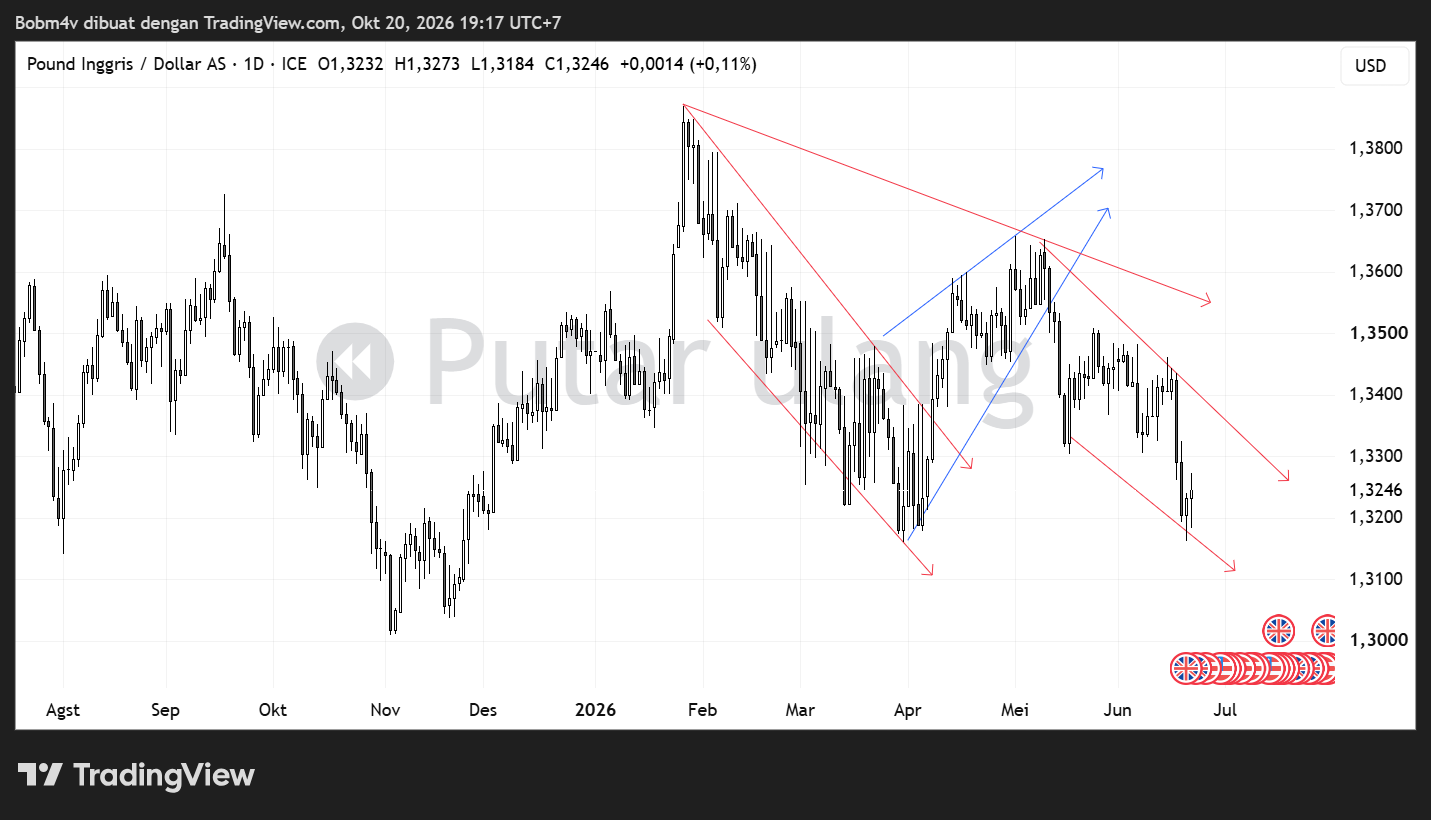
    Now, let’s take a look at what happens next on the same GBP/USD chart.

    A few days pass, and new candles begin to form. Surprisingly, the price moves downward again. This raises an important question: Was the trend actually bullish, or did we simply interpret the chart differently?

    But that’s not the only problem. Even if we agree that the market is trending in a particular direction, we may still disagree on which swing highs and swing lows should be used to draw the trendline.

    Before long, the chart can become cluttered with multiple trendlines, each telling a different story. Instead of helping us make decisions, our analysis leaves us wondering: Which trendline should we trust?

    This is exactly why objectivity matters. A trading strategy should provide clear, consistent rules so that different people analyzing the same chart can reach the same conclusion.

    If you are already experienced with this type of strategy, you may disagree with my perspective. That is perfectly fine. My intention is not to claim that trendline-based strategies cannot work, but to highlight a fundamental challenge: how can we know whether a strategy is truly effective if its rules depend heavily on individual interpretation?

    In my view, this subjectivity creates several problems.

    • No consistent rules: It becomes difficult to define precise, standardized conditions for identifying a trend.
    • Ambiguous swing points: Different traders may choose different swing highs and swing lows when drawing trendlines on the same chart.
    • Inconsistent entry and exit rules: If the trendline itself depends on personal judgment, the resulting entry and exit points may also vary from one trader to another.
    • Difficult to conduct objective backtesting: Without clearly defined rules, it becomes challenging to test a strategy consistently against historical data. The results may depend more on how the chart is interpreted than on the strategy itself.

    For me, this is the core issue. A strategy should not rely on what a trader thinks they see on a chart; it should rely on rules that can be clearly defined, consistently applied, and objectively tested.

    By now, I hope you have a clear understanding of what I mean when I say that a trading strategy should be objective rather than subjective.

    Are there other subjective trading strategies? Absolutely. In fact, some of them are very popular, such as Order Block strategies. In my view, these strategies can be particularly challenging to backtest objectively because identifying valid order blocks may depend on individual interpretation.

    That’s all for this discussion. See you in the next article!

    To see how these objective principles translate into an actual trading system, explore our complete framework in The XAU/USD Round Number Strategy (M15) and our foundational guide on building an Objective Trading Strategy.

    Official Automated Expert Advisor • 100% Free

    Automate This Strategy with the Round Number Gold EA

    Why calculate Round Number levels and manage pending orders manually? Download the official MT4 Expert Advisor with embedded 1:3 RR math, automatic pending order purge, and the exact backtested preset (+339% gain on Exness-Real33).